








Unique traits in Set 18 are tempting. A single champion carries a trait nobody else shares, and the payoff can define a late-game board. But a unique trait asks for something up front: board slots, gold and tempo before the reward arrives.
Available guides do not publish a definitive ranking of the best late-game unique traits, so this article does not invent one. It covers the unique traits in the Set 18 pool, what each group needs to prove before you commit, and how to decide in your own lobby.
Unique Traits Worth Evaluating for Late Game
Start with the breakpoint, not the champion
The key point from recent Set 18 guidance is that some unique traits only activate at a deep breakpoint. These are late-game commitments, and they can cost you health while you wait for the payoff.
- Check how far the bonus sits from your current board.
- Count how many slots and how much gold you must spend to reach it.
- Ask whether you can stabilize while you wait.
If you cannot answer those three questions, the trait is a gamble, not a late-game plan.
Avatar Lux and Attuned Alune
Avatar Lux and Attuned Alune are both in the unique-trait lineup. Read both tooltips carefully before you build around them.

Compare how each trait fits your frontline and backline. A unique trait that needs a specific board shape can be a poor fit if your carries are already settled.

Green Father Ivern and Old Growth Maokai
Green Father Ivern and Old Growth Maokai are two more unique traits to weigh against your stage 4 and 5 plans.

Do not assume a unique trait is strong because of its name. Check what it asks of the rest of the team and whether your items already point you elsewhere.

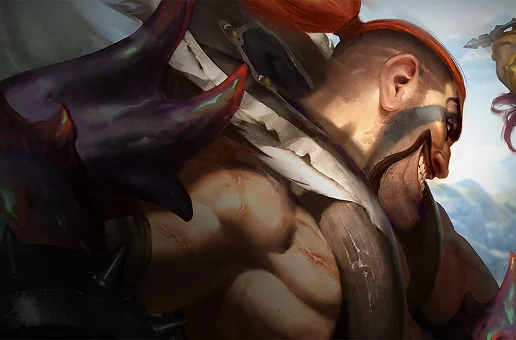
Bounty Seeker Draven, Rival Rengar and Kha'Zix
Bounty Seeker Draven and Rival Rengar and Kha'Zix are separate unique-trait entries. The Rengar and Kha'Zix entry is listed as a pairing, so confirm in-game how the trait is set up before you plan around it.
If you are weighing these against a standard carry line, ask which one gets more value from your remaining gold. A unique trait that costs several rerolls to enable is hard to justify when your economy is thin.
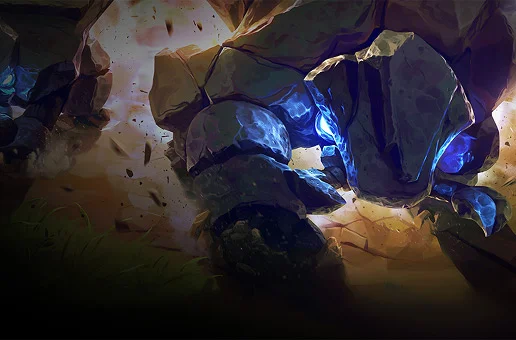
Monolith Malphite, Thornmaiden Zyra and Caustic Kog'Maw
Monolith Malphite, Thornmaiden Zyra and Caustic Kog'Maw round out the middle of the list.
Treat them as board-slot decisions. Every slot spent on a unique-trait champion is a slot not spent on a standard trait breakpoint. Late in the game, when your board is nearly full, that trade-off decides most of these picks.
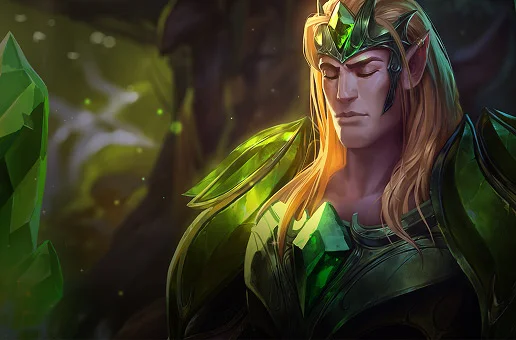
Apex Predator Elder Dragon and Emerald Aspect Taric
Apex Predator Elder Dragon and Emerald Aspect Taric complete the unique-trait lineup covered by the Set 18 explainer.

Before you commit, check whether your current items and augments reinforce the trait. If they do not, you are paying twice: once for the champion and again for the missing support.

Unique traits and the Trait Ladder augment
If you take the Trait Ladder augment, note that unique traits are excluded from it by default. That affects your plan, since the ladder's rewards depend on active traits that are not unique.
- 11 active traits: a Tactician's item and an extra unit slot.
- 12 active traits: three 4-cost champions and a Lucky Chest.
- 13 active traits: four components.
- 14 active traits: a Masterwork Upgrade.
In a ladder game, a unique-trait champion is usually a luxury. It is worth playing only if its own payoff outweighs the ladder progress you could make with that slot.
Conclusion
The strongest late-game unique trait in Set 18 is the one your board can actually reach and support. Deep breakpoints reward patience, but they can cost health while you wait, so check the numbers before you commit.
Read the tooltip, count the slots and compare the payoff to your alternatives. If a Trait Ladder run is in play, remember that unique traits do not count toward it by default.